Sonic or rotating: what is the difference?
17 November 2026 · 3 min read

Almost every electric toothbrush is one of two kinds. They look similar in a shop and feel quite different in the mouth.
Rotating
A rotating brush has a small round head that turns back and forth. You hold it against one tooth at a time and move on. The head is compact, which some people like for the back teeth, and the movement feels mechanical: you notice the brush working.
Sonic
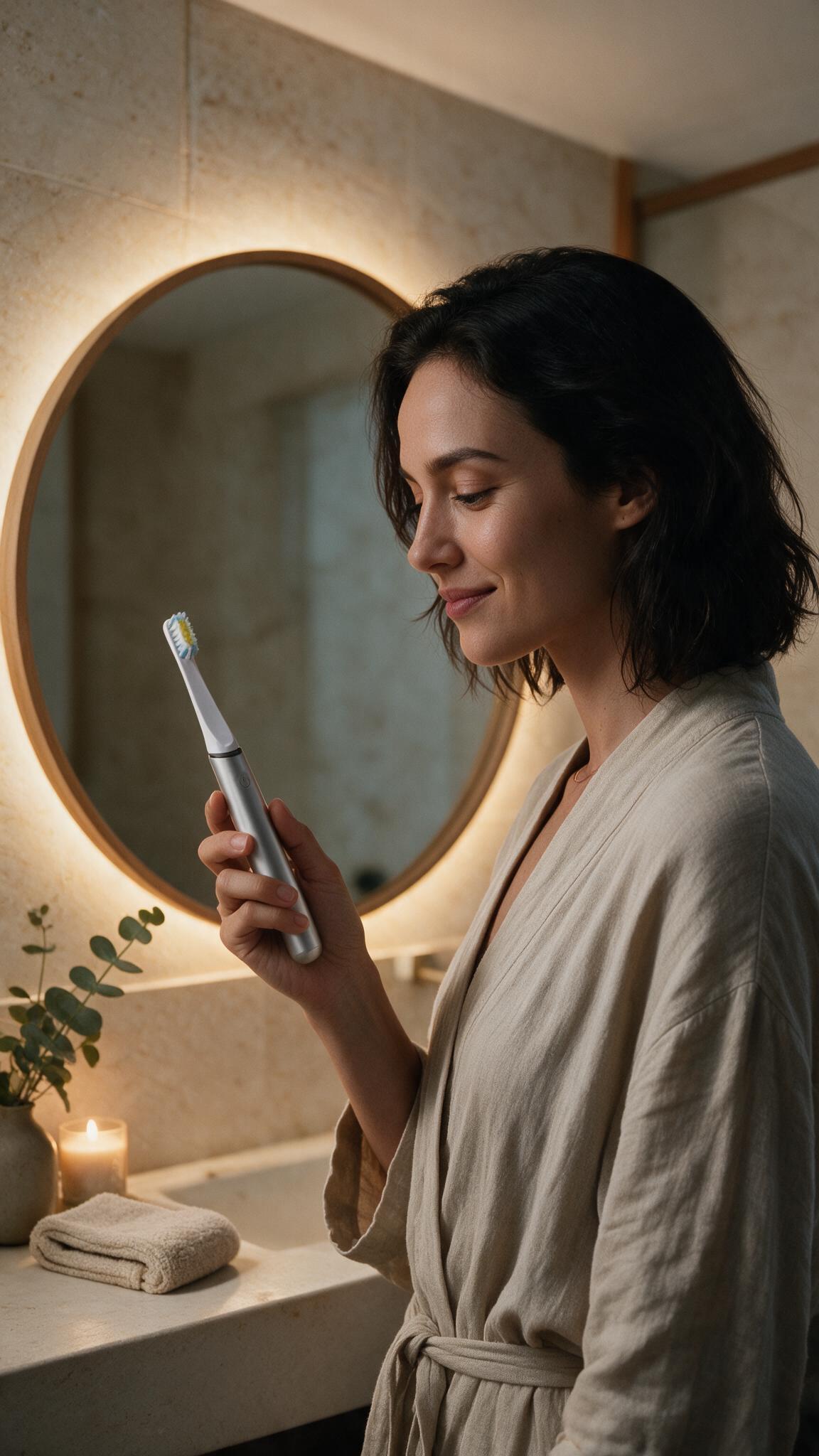
A sonic brush has a head shaped like a manual toothbrush. It does not turn. It sweeps side to side over a very small distance, very fast. Ours does this 32,000 times a minute. You guide it along the teeth as you would a manual brush, only slower and with less pressure. The feeling is a fine hum more than a movement.
Which one cleans better?
We are not going to tell you ours does. Both kinds do the job when they are used for two minutes, twice a day, with a head that is not worn out. The brush that works best is the one you actually use properly, every day.
So choose on the things you will notice:
- Feel. A hum, or a firmer mechanical movement.
- Head shape. Long and familiar, or small and round.
- Noise. Worth checking if you brush while someone is asleep next door. Ours stays under 50 dB.
- Handle. A sonic motor is small, so the handle can be slim.
- Charging. How often, and with what. Ours runs up to 45 days and charges over USB-C.
Why we chose sonic
Because of everything around the cleaning. It lets the brush be slim, quiet and simple: an aluminium handle, one button, three modes, and a head that needs no learning.
The Nora Elis Sonic Toothbrush: aluminium, one button, three modes, a travel case and a spare head in the box. €139, with free delivery in the Netherlands and Belgium.
See the brush